


 Send Inquiry
Silicate Mortar
Price 25 INR/ Kilograms
MOQ : 500 Kilograms
Silicate Mortar Specification
- Water Absorption
- < 2% after 24 hours
- Density
- 2.08 Gram per cubic centimeter(g/cm3)
- Usage & Applications
- Chemical Resistant Lining, Floor, Tank Lining, Acid Plants
- Application
- Industrial Use, Construction, Joining Acid Resistant Bricks and Tiles
- Surface Finish
- Smooth
- Chemical Composition
- Sodium Silicate, Fumed Silica, Fillers
- Purity(%)
- Approx. 98%
- Form
- Powder and Liquid (Ready to Mix)
- Product Type
- Silicate Mortar
- Types of Refractories
- Silicate Based Mortar
- Shape
- Powder + Solution (Two Component System)
- Porosity
- Low
- Dimensional Stability
- Excellent, Maintains Shape After Setting
- Strength
- High Bond Strength, 10-12 N/mm² (Compressive Strength)
- Specific Gravity
- 2.15-2.20
- Thermal Conductivity
- Low
- Color
- Grey
- Storage Condition
- Store in Cool, Dry Place Away from Moisture
- Setting Time
- 4-6 Hours (Initial), 24 Hours (Final)
- Shelf Life
- 6 Months (When Stored in Original Unopened Condition)
- Acid Resistance
- Excellent against Many Inorganic Acids except Hydrofluoric Acid
- Toxicity
- Non-Toxic Once Cured
- Mixing Ratio
- As per Manufacturer's Guidelines (Typically 3:1 by weight powder to solution)
- Packaging Size
- 25 kg bags (Powder), 20/50 kg Carboys (Liquid)
Silicate Mortar Trade Information
- Minimum Order Quantity
- 500 Kilograms
- Supply Ability
- 5000 Kilograms Per Week
- Delivery Time
- 3 Days
- Main Domestic Market
- All India
About Silicate Mortar
BHAVANI REFRACTORY-Silicate mortar, also known as potassium silicate mortar or potassium water glass mortar, is a type of inorganic mortar used for various construction and industrial applications. It is composed of potassium silicate solution (potassium water glass) mixed with a filler material such as silica sand or other aggregates. When the mortar cures, the potassium silicate solution undergoes a chemical reaction with carbon dioxide in the air, forming a hard, durable, and chemically resistant bond.
Here are some key characteristics and applications of silicate mortar:
Chemical Resistance: Silicate mortar offers excellent resistance to a wide range of acids, alkalis, salts, and other chemicals. This makes it suitable for use in environments where corrosive substances are present, such as chemical processing plants, wastewater treatment facilities, and laboratories.
Temperature Resistance: Silicate mortar can withstand high temperatures, typically up to around 400C (752F) depending on the specific formulation. This makes it suitable for applications where elevated temperatures are encountered, such as in industrial furnaces, kilns, and chimneys.
Inorganic Composition: Silicate mortar is an inorganic material, meaning it does not contain organic components that can degrade when exposed to heat or chemicals. This results in a highly stable and durable mortar that is resistant to degradation over time.
Adhesion: Silicate mortar forms strong bonds with various substrates, including concrete, brick, stone, and metal. This ensures good adhesion and structural integrity of the bonded surfaces.
Low Shrinkage: Silicate mortar typically exhibits low shrinkage during curing, which helps to minimize the risk of cracking and ensures a tight seal between bonded surfaces.
Applications: Silicate mortar is commonly used for various construction and repair applications, including masonry, concrete repair, joint sealing, and bonding of refractory materials. It is particularly well-suited for use in acid-resistant linings, flooring, and coatings in industrial environments.
Environmentally Friendly: Silicate mortar is considered environmentally friendly because it is composed primarily of inorganic materials and does not release volatile organic compounds (VOCs) during curing. This makes it a preferred choice for green building projects and sustainable construction practices.
Overall, silicate mortar is valued for its excellent chemical resistance, temperature stability, durability, and environmentally friendly properties. It is a versatile material used in a wide range of industrial and construction applications where resistance to corrosion, chemicals, and high temperatures is required.
High Acid Resistance for Demanding Environments
This silicate-based mortar boasts excellent resistance to most inorganic acids, excluding hydrofluoric acid. Its durability and chemical stability make it suitable for use in aggressive industrial environments, including chemical plants, acid plants, and pharmaceutical facilities. By providing strong acid resistance, the mortar helps extend the lifespan of linings and structures exposed to harsh chemicals.
Rapid Setting and Superior Strength
With an initial setting time of 4-6 hours and final curing in 24 hours, Silicate Mortar ensures a swift project turnaround without compromising structural integrity. Its high compressive strength (10-12 N/mm2) and low water absorption allow for robust applications in joining acid-resistant bricks and tiles, providing reliable, long-lasting bonds in both new construction and repairs.
User-Friendly Mixing and Application
The two-component system, comprising powder and liquid, is easy to mix following manufacturer guidelines (typical ratio of 3:1 by weight). The ready-to-mix formulation and detailed instructions ensure precise, efficient installation for floors, linings, and other industrial applications. The smooth surface finish and dimensional stability simplify handling, minimizing installation errors.
FAQ's of Silicate Mortar:
Q: How should Silicate Mortar be mixed for optimal results?
A: Mix the mortar using the manufacturer's recommended ratio, typically 3 parts powder to 1 part solution by weight. Pour the liquid component into a clean mixing vessel, gradually add the powder while stirring continuously, and blend until a smooth, homogenous paste is achieved for application.Q: What are the recommended storage conditions for Silicate Mortar?
A: Store Silicate Mortar in its original, unopened packaging in a cool, dry place, away from moisture. Proper storage ensures a shelf life of up to 6 months and maintains the quality and performance of both the powder and liquid components.Q: Where can Silicate Mortar be applied?
A: This mortar is ideal for chemical-resistant linings, industrial flooring, tank lining, and joining acid-resistant bricks and tiles in applications such as acid plants, chemical plants, and pharmaceutical facilities. Its excellent acid resistance and high bond strength make it suitable for demanding industrial and construction uses.Q: What makes Silicate Mortar ideal for use in the chemical industry?
A: Its outstanding resistance to most inorganic acids, except hydrofluoric acid, combined with low porosity, low water absorption, and a smooth surface finish, ensures protection and longevity for surfaces exposed to aggressive chemicals within industrial and chemical processing environments.Q: When does Silicate Mortar achieve its full strength?
A: The mortar initially sets within 4-6 hours and attains final strength after 24 hours under normal conditions. This rapid setting allows for quick project progress and structural use within a short timeframe.Q: What are the benefits of using a two-component silicate mortar system?
A: The two-component system allows for precise mixing, consistent quality, and adaptability in varied application scenarios. It delivers a high-purity (approx. 98%) product with excellent chemical and physical performance, and reduced installation faults.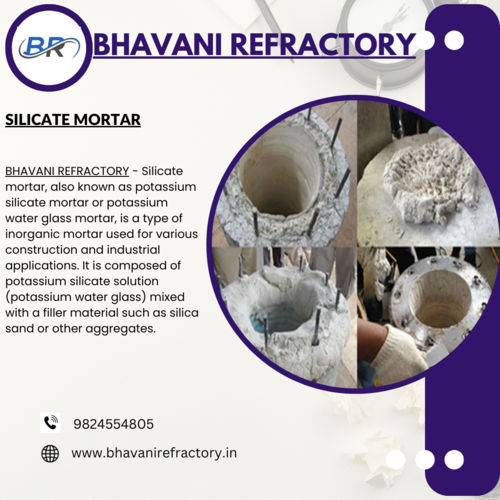
Tell us about your requirement

Price:
Quantity
Select Unit
- 50
- 100
- 200
- 250
- 500
- 1000+
Additional detail
Mobile number
Email

More Products in Acid Proof Mortar Category
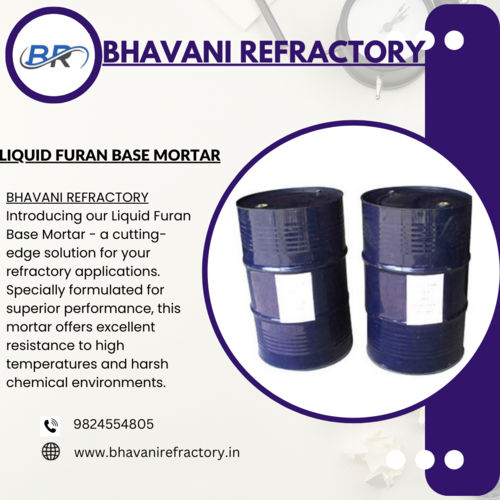
Liquid Furan Base Mortar
Price 300 INR / Liter
Minimum Order Quantity : 100 Liters
Types of Refractories : Other, Furan Base Mortar
Dimensional Stability : Other, Excellent
Shape : Other, Liquid/Paste for onsite mixing
Application : Used for lining of acidresistant bricks and tiles, chemical process floors, tanks, reaction vessels
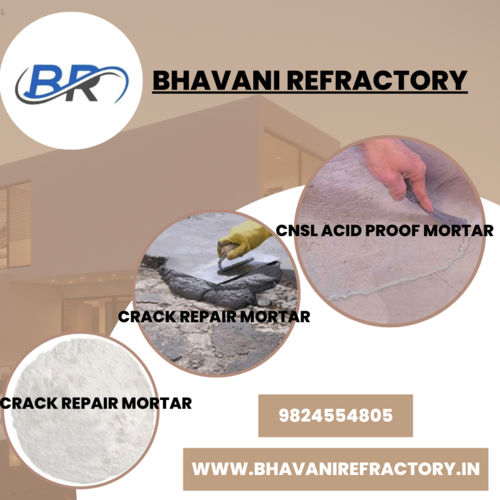
CNSL Acid Proof Mortar
Price 25 INR / Kilograms
Minimum Order Quantity : 500 Kilograms
Types of Refractories : Other, Acid proof mortar
Dimensional Stability : Other, High dimensional stability against acids and chemicals
Shape : Other, Powder & liquid (two component system)
Application : Acid resistant lining, tile fixing, chemical tank lining, floor lining in chemical plants
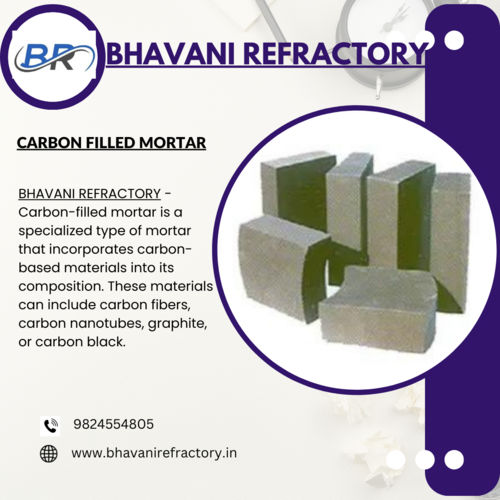
Carbon Filled Mortar
Price 230 INR / Kilograms
Minimum Order Quantity : 500 Kilograms
Types of Refractories : Other, Acid Resistant, Carbon Based
Dimensional Stability : Other, Excellent up to service temperature
Shape : Other, Powder/Mortar/Slurry
Application : Used for chemical plants, glass tank furnace, acid resistant lining, and battery room lining
White Mastic Powder
Price 12 INR / Kilograms
Minimum Order Quantity : 2000 Kilograms
Types of Refractories : Specific details not provided in the image, Other
Dimensional Stability : Other, Specific details not provided in the image
Shape : Other, Powder form
Application : Used for sealing and repairing surfaces

BHAVANI REFRACTORY
GST : 24BDRPP8725N1ZN
GST : 24BDRPP8725N1ZN

- Plot No.: 12, Madhuban Society, Near Ami Colony, Ankleshwar - 393002, Gujarat, India
- Phone : 08045800126

- Mr Rakesh Kumar Prajapati (Director)
- Mobile : 08045800126
-
 Send Inquiry
- Mobile :+919824554805, +919426142635
 Send Inquiry
 Send Inquiry
 Send SMS
 Call Me Free
BHAVANI REFRACTORY
All Rights Reserved.(Terms of Use)
Developed and Managed by Infocom Network Private Limited.
Developed and Managed by Infocom Network Private Limited.

