


 Send Inquiry
Acid Resistant Bricks
Price 29 INR/ Piece
MOQ : 500 Pieces
Acid Resistant Bricks Trade Information
- Minimum Order Quantity
- 500 Pieces
- Main Domestic Market
- All India
About Acid Resistant Bricks
Acid-resistant bricks, also known as acid-proof bricks or chemical-resistant bricks, are specialized refractory bricks designed to withstand exposure to acidic substances, corrosive chemicals, and other harsh materials. These bricks are commonly used in industrial environments such as chemical processing plants, refineries, laboratories, and other facilities where acids are handled or produced.
Acid-resistant bricks are essential for providing effective protection against chemical corrosion and ensuring the safety and integrity of industrial facilities where acidic substances and corrosive materials are present. Proper selection, installation, and maintenance of acid-resistant bricks are key to maximizing their performance and longevity in demanding environments.
Here are some key features and characteristics of acid-resistant bricks:
- Material Composition: Acid-resistant bricks are typically made from materials such as silica, fireclay, or high-alumina refractory materials that are inherently resistant to chemical corrosion. These materials are non-reactive and impervious to acids and other corrosive substances.
- Chemical Resistance: Acid-resistant bricks offer excellent resistance to a wide range of acids, including sulfuric acid, hydrochloric acid, nitric acid, and various organic acids. They are also resistant to alkalis, solvents, oils, and other chemicals commonly found in industrial settings.
- High Temperature Resistance: Acid-resistant bricks are capable of withstanding high temperatures, making them suitable for use in environments where elevated temperatures may be present, such as in furnaces, kilns, and reactors.
- Abrasion Resistance: Acid-resistant bricks are resistant to abrasion and mechanical wear, ensuring long-term durability and performance even in high-stress environments.
- Dimensional Stability: Acid-resistant bricks maintain their shape and size over time, even when exposed to extreme temperatures or fluctuations, ensuring a tight and secure installation.
- Variety of Shapes and Sizes: Acid-resistant bricks are available in a variety of shapes, sizes, and designs to suit different applications and requirements. They can be used for lining walls, floors, and other surfaces in industrial equipment and structures.
- Installation: Acid-resistant bricks are installed using specialized refractory mortar or adhesive that is resistant to acids and chemicals. Proper installation techniques are crucial to ensure a tight seal and long-lasting performance.
- Maintenance: Acid-resistant bricks require minimal maintenance but should be inspected regularly to check for any signs of wear, damage, or deterioration. Any damaged bricks should be replaced promptly to maintain the integrity of the lining.
Reliable Protection in Corrosive Settings
Our acid resistant bricks provide unmatched durability and resistance to acidic chemicals, making them an essential component in the chemical and pharmaceutical industries. Designed for high performance, they help safeguard processing equipment and surfaces from corrosive damage, minimizing downtimes and repair costs.
Precision Manufacturing for Optimal Performance
Crafted with advanced techniques, our acid refractory bricks exhibit reversible dimensional stability, allowing them to maintain their shape and integrity even after repeated thermal cycles. Our stringent manufacturing processes ensure consistent quality, meeting the demands of India's industrial sectors.
FAQ's of Acid Resistant Bricks:
Q: How are acid resistant bricks used in the chemical and pharmaceutical industries?
A: Acid resistant bricks are primarily utilized to line tanks, floors, chimneys, reactors, and vessels exposed to acidic substances. They serve as a protective barrier, preventing corrosion and extending the lifespan of the underlying structures in harsh chemical processing environments.Q: What are the main benefits of using acid resistant bricks?
A: The major benefits include exceptional resistance to corrosive acids, high durability, long lifespan, reversible dimensional stability, and ease of installation. These properties make them a cost-effective solution for maintaining infrastructure integrity in demanding industrial contexts.Q: When should acid resistant bricks be installed?
A: Acid resistant bricks should be installed during the initial construction of chemical and pharmaceutical plants or during maintenance shutdowns to replace worn or damaged linings in tanks, towers, floors, or other structures exposed to corrosive agents.Q: Where can these acid resistant bricks be sourced in India?
A: These bricks are available through reputable distributors, manufacturers, service providers, suppliers, and traders across India. Our company offers a comprehensive range along with expert support for selection and application.Q: What is the process for installing acid resistant bricks?
A: Installation involves arranging the bricks over properly prepared surfaces with suitable acid-resistant mortars. Precision alignment and thorough sealing ensure a continuous barrier that enhances chemical resistance and durability.Q: How do acid resistant bricks maintain dimensional stability?
A: The bricks are engineered to exhibit reversible dimensional stability, meaning they can withstand repeated heating and cooling cycles without permanent warping or cracking, ensuring consistent performance over time.Q: What types of acid refractory bricks are available for industrial use?
A: Various grades and compositions are available, tailored to different acid concentrations and thermal conditions. Selection depends on the specific chemical exposure and operational environment of the facility.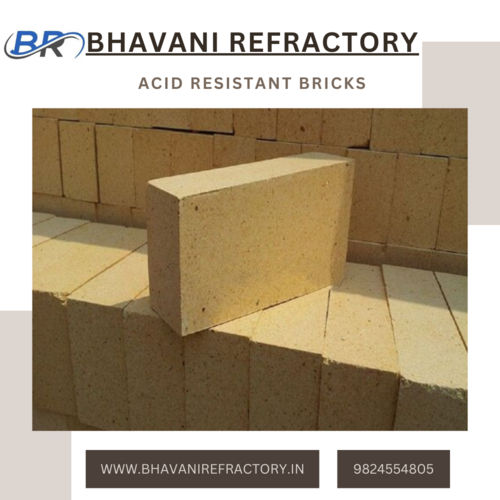
Tell us about your requirement

Price:
Quantity
Select Unit
- 50
- 100
- 200
- 250
- 500
- 1000+
Additional detail
Mobile number
Email

More Products in Acid Proof Bricks Category
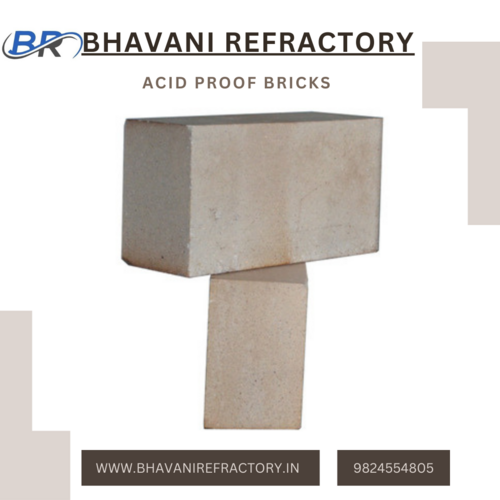
Acid Proof Bricks
Price 27 INR / Piece
Minimum Order Quantity : 500 Pieces
Product Type : Mineral Refractories
Dimensional Stability : Reversible
Types of Refractories : Acid Refractory
Shape : Brick
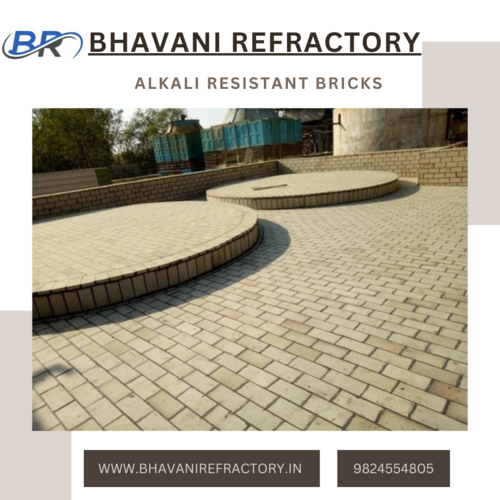
Alkali Resistant Bricks
Price 25.0 INR / Piece
Minimum Order Quantity : 500
Product Type : Refractories
Dimensional Stability : Reversible
Types of Refractories : Acid Refractory
Shape : Brick

BHAVANI REFRACTORY
GST : 24BDRPP8725N1ZN
GST : 24BDRPP8725N1ZN

- Plot No.: 12, Madhuban Society, Near Ami Colony, Ankleshwar - 393002, Gujarat, India
- Phone : 08045800126

- Mr Rakesh Kumar Prajapati (Director)
- Mobile : 08045800126
-
 Send Inquiry
- Mobile :+919824554805, +919426142635
 Send Inquiry
 Send Inquiry
 Send SMS
BHAVANI REFRACTORY
All Rights Reserved.(Terms of Use)
Developed and Managed by Infocom Network Private Limited.
Developed and Managed by Infocom Network Private Limited.

